By Nipa C. (Nipa Cloud)
Published : July 10, 2026
Time : 1 min read

Vulnerability Assessment
Vulnerability Assessment is a critical process for identifying security vulnerabilities, assessing their severity, prioritizing them for remediation.
Overview
In today's digital era, as information technology systems become increasingly complex and interconnected, the attack surface continues to expand, resulting in more sophisticated and severe cyber threats. Malicious actors can exploit vulnerabilities within systems to gain unauthorized access to sensitive data and cause significant damage. Therefore, cybersecurity must shift from a reactive approach to a proactive one through Vulnerability Assessment (VA), a critical process that helps identify security vulnerabilities, assess and prioritize their severity, and enable organizations to remediate them before they are exploited by malicious actors.
How it Works?
Vulnerability Assessment is more than simply using scanning tools to identify security vulnerabilities. It is a structured process that requires careful planning, from defining the assessment scope and selecting the appropriate tools to analyzing the results and recommending remediation measures. This enables organizations to manage security risks effectively and reduce the likelihood of cyberattacks. The Vulnerability Assessment process consists of the following steps:
1. Scope Definition: Begin by identifying the assets to be assessed, such as Compute Instances, VPC Networks, or applications. Clearly defining the assessment scope helps eliminate unnecessary duplication and ensures that the organization's critical systems are comprehensively covered.
2. Tool Selection: Choose the appropriate tools based on the assessment requirements. For example, Nessus is widely used for in-depth vulnerability scanning, enabling organizations to assess networks, operating systems, and applications through a single platform.
3. Scanning Process: Perform automated system scans to identify security vulnerabilities, including insecure configurations, software vulnerabilities, unnecessary running services, and externally exploitable weaknesses. Vulnerability scanning can be performed using two approaches:
- Unauthenticated Scan: Assesses the system from an external perspective, simulating how an attacker without valid credentials would view the environment.
- Authenticated Scan: Uses authorized credentials to inspect the system internally, providing deeper visibility and more accurate vulnerability detection.
4. Analysis and Risk Prioritization: The scan results are analyzed and categorized based on their severity, such as Critical, High, Medium, or Low, using industry standards like the Common Vulnerability Scoring System (CVSS). This enables security teams to prioritize remediation efforts based on the level of risk.
5. Remediation Guidance: Based on the assessment results, recommendations are provided to address identified vulnerabilities, such as applying security patches, correcting misconfigurations, disabling unnecessary services on Compute Instances, or strengthening access controls through Security Group configurations.
Features
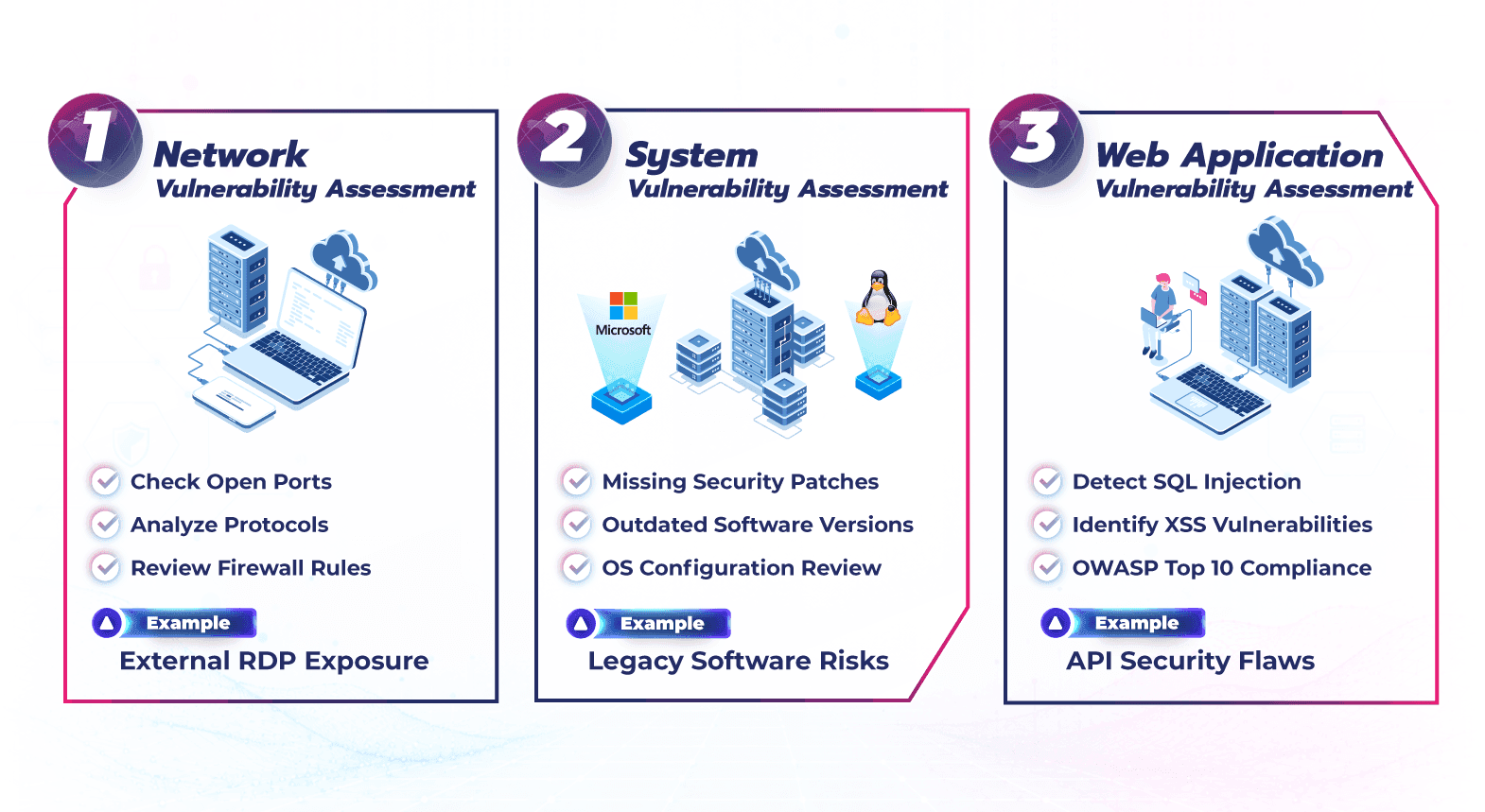
Vulnerability Assessment (VA) is the process of identifying, analyzing, and evaluating security risks across IT environments, including networks, servers, operating systems, and web applications. Its purpose is to identify vulnerabilities or security weaknesses that could potentially be exploited by attackers.
However, the concept of Vulnerability Assessment goes beyond simply "scanning for vulnerabilities." It is a systematic risk assessment process that helps organizations understand which vulnerabilities pose the greatest business risk, determine which issues should be prioritized for remediation, and implement appropriate security measures based on their specific operational environment.
In addition, vulnerabilities can generally be categorized into three main groups based on the type of system being assessed:
1. Network Vulnerability Assessment
Focuses on assessing network infrastructure and devices to identify security weaknesses, such as unnecessary open ports, insecure network protocols, or misconfigured firewall policies and Security Groups that could expose systems to attacks, such as allowing Windows Remote Desktop Protocol (RDP) access through a public IP address.
2. System Vulnerability Assessment
Evaluates vulnerabilities within operating systems and software, including missing security patches, outdated software versions, or software versions with known security vulnerabilities that could be exploited by attackers.
3. Web Application Vulnerability Assessment
Assesses the security of web applications and APIs by identifying common vulnerabilities, such as SQL Injection, Cross-Site Scripting (XSS), and other security risks based on the OWASP Top 10 standards.
Benefits
As cyber threats continue to evolve in both sophistication and frequency, organizations face increasing risks from vulnerabilities across their systems, infrastructure, and applications. These weaknesses can be exploited by attackers, leading to data breaches, business disruption, and reputational damage. Vulnerability Assessment serves as a proactive cybersecurity measure, enabling organizations to identify and address security vulnerabilities before they can be exploited. Its key benefits include:
1. Reduce the Risk of Cyberattacks
Identify security vulnerabilities before they can be exploited, assess and prioritize their severity, and remediate them effectively. This helps minimize attack opportunities for malicious actors and reduces the potential impact on business operations.
2. Improve Visibility into Security Risks
Provide a comprehensive view of vulnerabilities across networks, systems, and applications, enabling organizations to better understand their security posture and identify critical areas that require immediate attention.
3. Support Compliance with Security Standards and Regulations
Help organizations meet cybersecurity and regulatory requirements, including PDPA, ISO/IEC 27001, and PCI DSS, while providing detailed assessment reports that support compliance audits and security reviews.
4. Strengthen Organizational Trust
Enhance confidence among customers, business partners, and stakeholders by demonstrating that the organization follows a structured and proactive approach to cybersecurity risk management.
Use Case
Vulnerability Assessment is a fundamental cybersecurity practice adopted by organizations across a wide range of industries to proactively reduce security risks that could impact sensitive data and business operations. Depending on an organization's environment and operational requirements, Vulnerability Assessment can be applied in the following ways:
1. Financial Services and Banking: Financial institutions manage large volumes of transaction records and sensitive customer data, making cybersecurity a top priority. Vulnerability Assessment helps identify security weaknesses in critical systems, such as internet banking platforms and mobile applications, by detecting vulnerabilities like SQL Injection and Cross-Site Scripting (XSS). It also supports compliance with regulatory and industry security requirements.
2. Healthcare Organizations: Hospitals and healthcare providers are responsible for protecting highly sensitive patient information. Vulnerability Assessment helps reduce the risk of unauthorized access, data breaches, and information loss, particularly within Electronic Health Record (EHR) systems, which are essential to modern healthcare services.
3. Government Agencies: For public sector organizations, Vulnerability Assessment plays a critical role in evaluating the security of citizen-facing services, including government websites, databases, and email systems. By identifying and mitigating vulnerabilities, agencies can reduce the risk of cyberattacks and data breaches while maintaining public trust.
4. E-commerce Businesses: As online retailers process customer information and digital transactions, securing web applications is essential. Vulnerability Assessment helps identify weaknesses in e-commerce websites and backend systems, including vulnerabilities such as SQL Injection, Cross-Site Request Forgery (CSRF), and Remote Code Execution (RCE), reducing the risk of data theft and strengthening customer confidence.
5. General Organizations and Small Businesses: Although smaller organizations may operate less complex IT environments than large enterprises, they remain vulnerable to cyber threats. Vulnerability Assessment enables businesses to identify weaknesses in their IT infrastructure, improve security configurations, and proactively reduce the risk of cyberattacks.
Summary
Vulnerability Assessment is a proactive cybersecurity practice that helps organizations identify, analyze, and evaluate security risks across their IT environments, including networks, operating systems, and web applications. Its primary objective is to uncover security weaknesses before they can be exploited by malicious actors.
The key benefits of Vulnerability Assessment include reducing the risk of cyberattacks, improving visibility into security risks, prioritizing remediation efforts, supporting compliance with standards and regulations such as PDPA and ISO/IEC 27001, minimizing business impact, and strengthening organizational trust. Vulnerability Assessment can be applied across a wide range of industries—including financial services, healthcare, government agencies, and e-commerce—enabling organizations to proactively defend against cyber threats and build a more resilient security posture in the digital era.